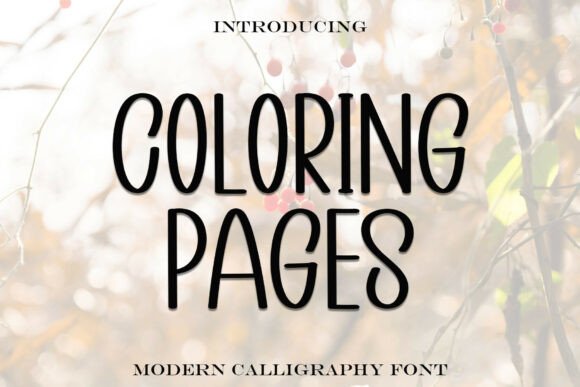
Coloring Pages: A Versatile Font for Creative and Elegant Design
Coloring Pages is more than just a font—it's a design element that brings warmth, charm, and personality to a wide range of visual projects. With its sweet and cursive handwritten style, this font adds a unique aesthetic that blends elegance with casual appeal. Whether you're designing a brand identity, crafting wedding invitations, or creating promotional materials, Coloring Pages offers a versatile solution that can elevate your designs in both style and substance.
The Unique Characteristics of Coloring Pages Font
At first glance, the Coloring Pages font stands out due to its handcrafted appearance. Each letter is drawn with a soft, flowing motion, giving it a natural and organic feel. This cursive style is reminiscent of handwritten notes, making it ideal for personal and artistic projects. The font’s gentle curves and rounded edges contribute to its approachable and friendly look, which contrasts nicely with more rigid, formal fonts.
One of the most appealing aspects of Coloring Pages is its versatility. It works well in both small and large sizes, maintaining readability even when scaled down. The font’s legibility is enhanced by its consistent stroke width and spacing, ensuring that text remains clear and easy to read at any size. This makes it suitable for use in a variety of contexts, from digital marketing campaigns to printed materials like greeting cards and stationery.
In addition to its visual appeal, the font's character set includes a range of accents and special characters, expanding its usability beyond standard Latin scripts. This feature is particularly useful for designers who want to incorporate foreign languages or stylized symbols into their work without compromising the overall aesthetic.
Where to Use Coloring Pages Font Effectively
The beauty of Coloring Pages lies in its adaptability. It can be applied across multiple industries and design purposes, offering a fresh and elegant touch to various creative endeavors. Here are some of the most effective applications:
- Branding and Logo Design: For businesses looking to create a warm and inviting brand identity, Coloring Pages can serve as a perfect choice for logos, taglines, and branding elements. Its soft and romantic tone aligns well with lifestyle brands, boutique stores, and artisanal products.
- Wedding Invitations and Stationery: When it comes to wedding design, the font’s elegant yet casual nature makes it an excellent fit for invitations, thank-you notes, and other event-related materials. It adds a touch of sophistication while keeping the tone light and heartfelt.
- Greeting Cards and Personal Projects: Whether it's a birthday card, holiday message, or a love note, Coloring Pages brings a personal and handcrafted feel to every piece. It’s especially popular among those who enjoy DIY projects and handmade crafts.
- Fashion and Lookbooks: In the fashion industry, the font can be used on product labels, lookbook headers, and promotional banners. Its stylish and feminine appearance complements both high-end and casual fashion lines.
- Marketing and Promotional Materials: From social media posts to print ads, Coloring Pages adds a charming and memorable touch to marketing content. It helps brands stand out in a crowded market by creating a visually distinct and engaging presence.
Each of these use cases highlights how the font’s characteristics—such as its softness, elegance, and readability—make it a valuable tool for designers seeking to create visually compelling and emotionally resonant content.
Considerations for Using Coloring Pages in Design Projects
While Coloring Pages offers many benefits, there are also some important considerations to keep in mind when using it in your design projects. First and foremost, it's essential to ensure that the font is used appropriately for the intended purpose. For example, while it may look beautiful in a wedding invitation, it might not be the best choice for a professional business report or technical documentation.
Another key consideration is the font’s compatibility with different platforms and file formats. While most modern design software supports Coloring Pages, it’s always a good idea to check the font’s licensing terms and availability across various tools. Additionally, when using the font in digital formats such as websites or mobile apps, make sure that it renders correctly across different devices and screen resolutions.
It’s also worth noting that the font’s handwriting style may not be suitable for all audiences. While many people appreciate its charm and warmth, others might find it too informal or difficult to read in certain contexts. As a result, it’s important to consider the target audience and the overall tone of the project before deciding to use Coloring Pages.
Finally, pairing Coloring Pages with complementary design elements can help enhance its visual impact. For instance, combining it with pastel colors, floral patterns, or soft textures can create a cohesive and harmonious design. On the other hand, using it alongside bold, geometric shapes or contrasting colors might dilute its intended effect.
Why Designers Choose Coloring Pages
Designers often turn to Coloring Pages because of its ability to convey emotion and personality through typography. Unlike more rigid and impersonal fonts, Coloring Pages allows for a more expressive and human-like approach to text. This makes it particularly well-suited for projects that aim to evoke feelings of love, nostalgia, or creativity.
Moreover, the font’s popularity has grown significantly in recent years, thanks to its widespread use in social media, online communities, and creative platforms. Many designers have embraced it as a go-to option for adding a unique and stylish touch to their work. Its accessibility and affordability also make it a practical choice for both professionals and hobbyists alike.
Ultimately, the decision to use Coloring Pages depends on the specific goals of the project and the desired outcome. When used thoughtfully, it can transform ordinary text into something memorable and meaningful, enhancing the overall impact of the design.